
TL;DR
Car hire excess, defined. The excess is the amount a rental company can still charge you for damage to its own car once the collision damage waiver has applied. The waiver is a contract term rather than an insurance policy, so what it excludes is set by the hire company and differs between them. In Cyprus it also stops at the Green Line.
- A waiver is a contract term, not a policy. Google's own AI Overview for the phrase called it a contract modification rather than formal insurance when I read it on 13 August 2026.
- The Rentals in Cyprus excess is a flat €300 and the optional waiver is €15 a day on cars, confirmed 11 August 2026. Published Cyprus excesses ran from €0 to €5,000 across 21 operators read on 7 September 2026, and the median entry figure was €300.
- Every waiver excludes something. This one excludes off-road use, tyres, glass, the underbody, the interior and the keys.
- The excess and the deposit are two different numbers. A refundable 300 euro deposit is taken at pick-up here, by card or in cash, subject to approval, vehicle category and rental conditions.
- Third-party excess policies ran £12.24 to £47.46 a week and £30.49 to £56.87 a year, against counter products at £110 to £287 a week, per Which?, prices checked March 2026.
- Packaged bank-card cover often requires you to buy the counter waiver first and the hire to start more than 200 km from home. Cyprus is about 240 km end to end.
- Your cover stops at the Green Line. The Foreign Office states that cars hired in the Republic of Cyprus often have no insurance cover in the north of the island.
On this page
What is the excess on a car hire in Cyprus?
It is the part of a damage bill you pay yourself before the waiver covers the rest, and every hire car in Cyprus has a figure attached to it. At Rents in Cyprus that figure is a flat 300 euro on eligible bodywork with the optional waiver at 15 euro a day, confirmed 3 August 2026. Published Cyprus excesses ran from zero to 5,000 euro across 21 operators read on 7 September 2026, with a median entry figure of 300 euro. That figure decides what a scraped bumper costs you, and it is the number on the agreement most people never read.
At Rentals in Cyprus it is a flat €300 on eligible bodywork, with the optional waiver taken, confirmed 3 August 2026. Flat matters more than the amount. Most operators set the excess by car category. So the number you are quoted for a small hatchback is not the number attached to the seven-seater you actually book.
Then the distinction almost nobody builds a section on, although Google's own AI Overview states it in its first sentence. A waiver is not insurance. It is the hire company agreeing, in the contract, not to charge you above a limit. That is why the exclusions further down this page are so specific, and why they differ between companies. It is also why two quotes carrying the same excess figure can leave you in very different positions.
Two things are already in the rate and need no decision from you. One is third-party liability cover, compulsory in every EU member state under the EU Motor Insurance Directive 2009/103/EC. The other is 24/7 roadside assistance. Third-party liability pays for damage you do to other people and their property. It pays nothing at all towards the car you are driving. That confusion is what sends most people to a page like this one.
It is also the number that almost never appears beside a published day rate, which is most of what the advertised Cyprus figures leave out.
What none of that settles is which companies actually publish their exclusions, and what the Paphos market puts on its own pages is uneven enough that it is worth reading before you compare two excess figures.
CDW, SCDW, LDW, ERI: which of these is actually insurance?
Only one of the four. CDW and SCDW are contract terms sold by the rental company. LDW is the same waiver with theft of the car folded in, which is why the RAC treats it as an alias rather than a separate product. Excess reimbursement insurance is the only genuine policy in the list. It comes from a third party, and it pays you back after you have already paid.
| Name | What it actually is | Who sells it | What it leaves you paying |
|---|---|---|---|
| CDW, collision damage waiver | A contract term capping the company's damage charge | The rental company | The excess |
| SCDW, super collision damage waiver | A second contract term reducing the excess, often to zero | The rental company, usually at the counter | Little or nothing, at a counter price |
| LDW, loss damage waiver | The same waiver with theft of the vehicle included | The rental company | The excess |
| ERI, excess reimbursement insurance | A genuine insurance policy | A third-party insurer | The damage bill first, reclaimed afterwards |
Which? lists the counter product under four different names at once: Collision Damage Waiver, Excess Waiver, Super Cover and Excess Protection, read 13 August 2026. That is the practical trap. Comparing two quotes by the name of the cover tells you nothing. The only comparison that means anything is the excess figure plus the exclusion list beside it.
For the record, so this page is not vague about its own author's employer. Rentals in Cyprus sells the optional CDW at €15 a day on cars, confirmed 11 August 2026. It sells no zero-excess product at all, because it does not have one.
What is not covered by the collision damage waiver?
The waiver covers eligible bodywork and stops there. At Rentals in Cyprus the exclusion list is off-road use, tyres, glass, the underbody, the interior and the keys, confirmed 3 August 2026.

Decline a waiver altogether and there is no cap at all. That is the honest answer to a question the People Also Ask box keeps raising. You are not left with a bigger excess. You are left carrying the damage bill up to the value of the car.
Three exclusions are close to universal and worth knowing before you compare anyone's terms. A waiver never covers third-party liability, never covers personal belongings left in the car, and never covers damage caused by breaching the rental agreement itself. The RAC names all three, read 13 August 2026.
Beyond that, exclusion lists differ by company in ways worth reading for. Which? scores waivers on whether they leave out the roof, the mirrors and locks, and misfuelling, read 13 August 2026, and those four are exactly the ones people assume are covered. The list above is the one that applies at Rentals in Cyprus. Ask for the equivalent list wherever you are hiring, because comparing two excess figures without comparing the two lists beside them is comparing nothing.
Now the Cyprus point, and no page in either search result I checked makes it. The exclusion list is written for sealed roads, and a lot of what people drive to in Cyprus is not on one. The Akamas tracks. The approach to Lara Bay. The last two kilometres up to a hill village. Those are precisely where an underbody and tyre exclusion stops being fine print and starts being the whole bill.
Rentals in Cyprus prices that risk openly rather than burying it. Driving off sealed roads carries a penalty of €450 per violation on a standard car and €600 on an SUV, MPV or seven-seater, plus €20 to €30 for every started kilometre off the asphalt, read from the signed rental agreement on 6 September 2026. The agreement allows 15 metres past the end of the asphalt to turn around and treats anything beyond that as a violation. The penalty is more expensive than the excess it sits beside, and it is deliberately so.
There is a second consequence that matters in a market like this one, and I have not found it published anywhere. Third-party excess policies exclude off-road and recreational vehicles, and motorcycles, mopeds and motorbikes, outright. I have read that in one major insurer's published terms, on 13 August 2026, rather than across the market, so treat it as at least one insurer rather than all of them. If it holds more widely, a buggy or scooter renter in Cyprus cannot buy this cover at all. The buggies here carry no waiver either, for the same underlying reason: a waiver excludes off-road use, and off-road use is the whole of what a buggy does. The our Cyprus car hire rental terms set all of this out.
Is zero-excess car hire really zero?
A zero-excess product is a paid upgrade that buys the excess down to nil. It is not a cheaper hire and it is not wider cover. It changes the number you owe on a claim the cover already accepts, and it leaves the exclusion list exactly where it was. What that list still excludes is the whole question.
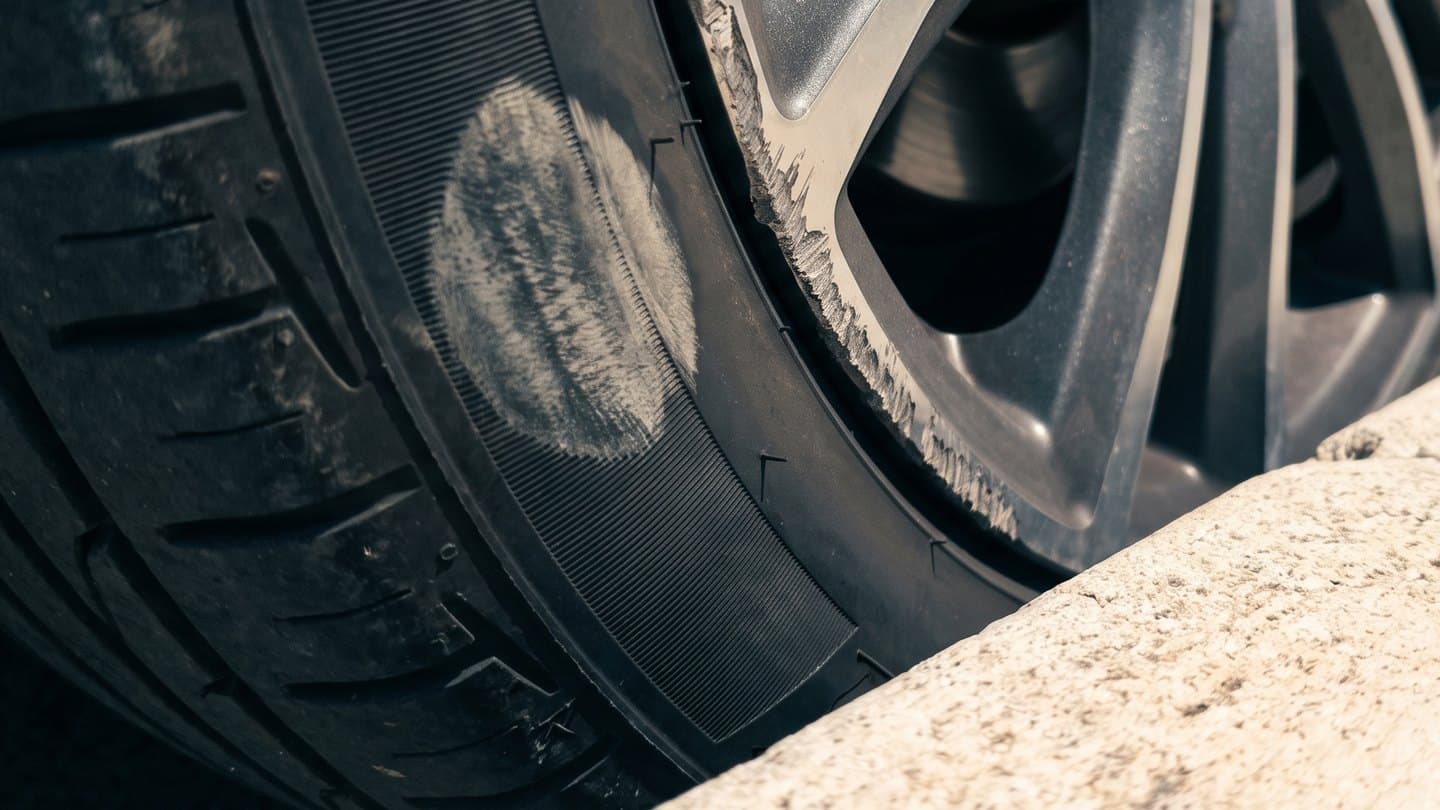
| If this happens | Our waiver, €300 excess | A zero-excess upgrade, as published | Third-party excess insurance |
|---|---|---|---|
| Bodywork damage on a sealed road | Covered above €300; you owe up to €300 | Covered, and the advertised point of the product | You pay the hire desk, then claim it back |
| Tyres | Not covered | Depends on that seller's list; Which? scores waivers on exactly this | carhireexcess.co.uk advertises tyres and windscreen on its own home page, read 7 September 2026 |
| Glass and windscreen | Not covered | Depends on that seller's list | Advertised as covered by at least one seller, as above |
| The underbody | Not covered | Depends on that seller's list | carhireexcess.co.uk advertises keys and undercarriage, read 7 September 2026 |
| Lost keys | Not covered | Named by Google's own summary as possibly still needing separate cover, read 7 September 2026 | Advertised as covered by at least one seller, as above |
| The interior | Not covered | Named by that same summary | Depends on the policy |
| Driving off the asphalt | Not covered, and separately penalised at €450 to €600 plus €20 to €30 per started kilometre | Not published by any company I read | At least one major insurer excludes off-road and recreational vehicles outright, read 13 August 2026 |
| Who you claim from | Nobody; there is nothing to reclaim | The hire company | Your insurer, after the hire company has already been paid |
| Who is holding your money meanwhile | No cash deposit where the card takes the pre-authorisation | Depends on the seller | The hire company, until the reimbursement lands |
Google's own answer for the phrase says both things at once, and you can check it. Read on 7 September 2026, the AI Overview for zero excess car hire opens by saying you pay nothing toward repair or replacement costs if the car is damaged or stolen, sourced to Hertz and the RAC. Three bullets later, the same box says misfuelling, interior damage and lost keys may still require separate cover depending on the policy. Both sentences are in the same answer. The second one is the one that costs money, and it is the one nobody puts in a headline.
So the useful question is not whether the excess is zero. It is which list the product is zero against. Take the exclusion list from the section above and read it as the real specification: tyres, glass, the underbody, the interior, the keys and off-road use are where a Cyprus hire actually goes wrong, and a nil excess on eligible bodywork does nothing for any of them unless that seller's own document says it does.
A local named example makes the point better than the generic one, and it was read this week. Paphos Car Rental publishes zero excess as standard, with full collision damage waiver, no excess liability, no security deposit and no credit-card hold. On the same page the product is gated at ages 25 to 75, and a booking deposit of 30 euro is stated a few lines under the words no security deposit. Both read on 7 September 2026. Neither is hidden and neither is a trick: the point is that a nil excess is a product with conditions attached, exactly like a waiver, and the conditions are where the two differ. A driver of 22 or 78 reading the words zero excess is reading about a product they cannot buy.
Three routes exist and they behave differently at the moment something happens. A counter upgrade reduces the excess on the hire company's own cover. A third-party excess policy leaves the excess where it is and reimburses you afterwards, which means you pay the hire desk first and wait. And a waiver like ours reduces your exposure to a stated figure and stops there. The middle one is the only one where you are out of pocket in the meantime, and that is a cash-flow fact rather than an insurance one.
There is one restriction on these products that almost never appears beside the word zero, and it is the one that can stop the holiday rather than cost money. Of the two companies advertising a zero-excess full-insurance product in Paphos on 3 August 2026, one restricted it to drivers aged 25 to 75. A cap like that is not an excess question at all. It is an eligibility question, and you find out at the desk.
For contrast, and taken from the rental agreement rather than from a marketing line: Rentals in Cyprus hires cars from 21 with a licence held two years, and up to 90 on the pick-up date, with 15 per cent added to the rental line from 74 and 30 per cent from 76. Nobody is turned away for being 76. The oldest named driver sets the band, so adding an older second driver moves the whole hire. Those figures and the market comparison beside them are kept up to date on the Paphos car hire page, which is where the competitor observations in this section are re-verified.
And the line that goes against us, because leaving it out would make this section an advertisement. On 13 August 2026 Thrasos Paphos Car Hire published a plain €250 excess with no deposit and no block on the excess amount. That is lower than ours on the same kind of product. Rentals in Cyprus sells no zero-excess product at all and is not going to pretend otherwise: what it sells is an optional waiver at €15 a day that leaves a flat €300, with the exclusion list printed above rather than buried.
Is the excess the same as the deposit?
No, and conflating the two is the most expensive misunderstanding in this whole subject. The excess is what you may owe if the car is damaged. The deposit is money held against your card the entire time you have the car, whether anything happens or not.

At Rentals in Cyprus they are €300 and, a refundable 300 euro deposit at pick-up, by card or in cash, subject to approval, vehicle category and rental conditions, confirmed 3 August 2026. There is no prepayment at any stage either, so you pay on pick-up, by cash or card.
Which? concedes the one genuine argument for buying cover at the desk, and it is worth more coming from an organisation that recommends you do the opposite. Its own expert says the only advantage of the counter product is that you avoid leaving a large deposit or pre-authorisation on your card. I read that on 13 August 2026. If a four-figure hold on your card would ruin the first week of your trip, that is a real reason, and it has nothing to do with insurance.
One consumer-protection point that is not marketing, and that I can source. The Foreign Office travel advice for Cyprus states that rental companies often ask for your passport as a deposit, that this is illegal, and that you should never hand your passport over in this way. I re-verified that wording on 13 August 2026. Nobody at Rentals in Cyprus will ask you for it.
How much is a car hire excess in Cyprus, and is €600 a lot?
Mid-range, and I would rather answer that plainly than imply it is outrageous. Against a published Cyprus range of €0 to €5,000 across 21 operators read on 7 September 2026, whose median entry figure is €300, and Which?'s typical £200 to £2,000 rising to £3,000 read on 13 August 2026, a €600 excess sits above the median and well inside the range.
| What you are comparing | Rentals in Cyprus | The published market |
|---|---|---|
| Excess on a car | €300 flat, eligible bodywork, confirmed 3 August 2026 | €0 to €5,000 across 21 published Cyprus operators, median entry €300, read 7 September 2026 |
| Optional damage waiver | €15 a day, cars only, confirmed 11 August 2026 | Counter waivers ran £110 to £287 a week, Which?, prices checked March 2026 |
| Deposit | No cash deposit with a valid credit card, subject to approval | A card pre-authorisation is the norm |
| Third-party liability | Included | Included across the EU, by law |
| Roadside assistance | 24/7, included | Rarely published |
| Waiver on a buggy | None at all | Third-party policies exclude recreational vehicles |
Here is the arithmetic the reader is actually doing, done out loud about this company's own product. Seven days of the €15-a-day waiver is €105 to remove a €300 exposure. On a short hire that is a poor trade. On a long one it is a worse trade, because the price scales with the days and the exposure does not. I would rather write that down than sell it.
For scale on what damage actually costs, Which? has published figures of roughly €250 for a scratched door, €300 for a puncture and up to €750 for a windscreen. The article dates its policy prices to March 2026 but leaves these to a vaguer recent past, so they are an indication of order of magnitude rather than a price I would plan around. What they do show is that a €300 excess is not a theoretical number. One careless kerb reaches it.
What do Cyprus car hire companies actually charge? A survey of 21 operators
The mean entry excess is €464 and the median is €300, across the 11 of 21 Cyprus operators that publish a figure for the cover you get if you buy no upgrade. The full published range is €0 to €5,000. Eight of the 21 publish no excess figure at all. Read on 7 September 2026.
| Operator | Excess if you buy no upgrade | Zero-excess product? | Deposit blocked | Exclusions published? |
|---|---|---|---|---|
| Andy's Motors | Not published, at any of three waiver tiers | Not published | Not published | Partly |
| Arenda Cyprus | Not published | Yes | Not published; 30% pre-payment | No |
| AutoTrust Cyprus | €300 to €900, nine car groups | Yes, zero excess and zero deposit | Equal to the excess, held for the rental | Yes |
| Camel Car Hire | Not published; a waiver reduces it to €200 to €600 | Yes | None advertised | Yes |
| Chris Car Hire | €1,000 to €2,000, three bands | Not published | €500 to €1,000, released 15 days after return | Yes |
| Cosmos Car Rental | €300 to €1,500, six groups | No; a waiver reduces it to €100 to €600 | Equal to the excess | Yes |
| Cyprus Voyage | Not published | Not published | Not published | No |
| DDS Car Rentals | Not published, “varying, according to vehicle type” | Not published | Not published | No |
| Easy Rent a Car | Not published | Not published | None, “no upfront deposit” | No |
| Elephant Rent a Car | €900, on damage not caused by a collision | Not published | €450 if you drive on the left at home, €900 if you drive on the right | Yes |
| Hertz Cyprus | €800 to €2,000, four bands, and the waiver is a paid extra | Yes, €8 to €25 a day | €300 to €950 by category, release up to 14 days | Yes |
| Infinite Car Rentals | Not published; €1,200 or €800 with a paid waiver | None, and it says so | Pre-authorised, amount not published | Partly |
| PafoRentals | Not published | Yes | Not published | No |
| Paphos Car Rental | €0 at ages 25 to 75; €1,000 flat if any named driver is under 25 or 76 and over | Yes, as standard | None, and no card hold | Yes |
| Petsas | €700 to €5,000, six groups, under seven days; no excess from seven days | Yes, included from seven days | Fuel deposit only; damage deposit not published | Yes |
| Privilege Rent a Car | €300 to €1,000, six groups | Yes, €11 a day, or €9 from 15 days | None, “do not block any money” | Yes |
| Rentals in Cyprus (this site) | €300 flat, eligible bodywork | None | €300, refundable, at pick-up; held as a card pre-authorisation where the card takes one | Yes |
| Simila Cyprus | €250 | Yes, €5 a day | None required | Partly |
| Thrasos Car Hire | €250 | No | None, and no block on the excess | No |
| U2 Car Hire Cyprus | Not published | Not published | Not published | No |
| Zest Car Rental | Not published; excess protection advertised as included | Advertised, no figure | Not published | No |
I read the published terms of 21 car hire operators in the Republic of Cyprus on one day, 7 September 2026, and wrote down what each of them states. That paragraph above did not exist anywhere before, and the reason it did not is that the work is dull rather than difficult: it is twenty-one terms pages, most of which bury the number in a wall of clauses, and eight of which do not carry it at all.
The sample is every operator I could reach that supplies the Greek-controlled side of the island and publishes its own terms, drawn from the companies that rank or hold local-pack slots for Cyprus car hire at the UK and Cyprus loci. Aggregators, brokers and comparison sites are excluded on purpose: they resell somebody else's excess rather than setting one, so a row for them measures the supplier behind it and not the site you booked on. Turkish-occupied northern supply is excluded entirely, because your Republic of Cyprus insurance does not work there and the comparison would be meaningless.
Here is what that produced. Read the two right-hand columns before the excess column: what a low excess is worth depends entirely on what it excludes and on what is being held against your card meanwhile.
Three things in that table are worth more than the average, and the first one is the one to take to the desk with you. The exclusion list is the market's constant and the excess is its variable. Every operator that publishes a list excludes the same things: tyres, glass, the underbody, and usually the interior and the keys. Three of them then sell one of those exclusions back as a separately priced product, between €3 and €10 a day. So a €250 excess and a €900 excess can leave you in the same place after a kerbed wheel, and the figure on its own does not tell you which.
The second is that at one operator the excess depends on how long you hire rather than on which car you take. Petsas publishes €700 to €5,000 for a rental under seven days and no excess at all from seven days, both read on 7 September 2026. Nobody comparing day rates would ever see that, and it can be worth more than the rate difference it hides behind.
The third one I had not seen published anywhere before this survey. Elephant Rent a Car sets the deposit by which side of the road you drive at home: €450 if your own country drives on the left, €900 if it drives on the right, with the reason stated plainly, that Cyprus drives on the left and a right-hand-driving visitor is a bigger risk. It verifies the licence to decide which figure applies. Read 7 September 2026. Whatever you think of it, it is the only term in the sample that prices where you learned to drive.
And the fourth finding, which is not about money at all. The most complete published terms in the country are in Greek only. Hertz Cyprus publishes a four-band excess ladder, a four-band deposit ladder, five priced cover tiers and a full exclusion list, and it publishes all of it on its Greek pages. The English path returns a 404. The visitor most likely to need those numbers is the least likely to be able to read them, and that is worth knowing before you assume an international brand is the transparent option.
Now the part that costs this company, because a survey whose author comes out best is a price list with a chart on it. The Rentals in Cyprus €300 is the median of this market, not the floor. Two operators publish a lower plain excess, both at €250, and one publishes zero as standard for drivers between 25 and 75. Nine of the 21 sell a zero-excess or full-cover product and Rentals in Cyprus sells none. On the deposit it sits in the weaker group rather than the stronger one: five operators publish what they will hold against your card, six publish that they hold nothing, and Rentals in Cyprus publishes neither a figure nor a promise. The rule it does publish is that the 300 euro deposit is held on the card where it accepts a pre-authorisation, rather than taken in cash. How much is authorised is not recorded anywhere I can quote from, so this page does not state it. Elephant, Hertz and Chris all publish theirs. That is a fair thing to hold against the company, and I would rather you read it here than find it out at the counter.
Is third-party car hire excess insurance worth buying?
Usually yes against an excess of €1,000 to €2,000, and genuinely marginal against a flat €300. The arithmetic is not close at the top end, and it is close enough to be a matter of temperament at the bottom.
Third-party car hire excess insurance and excess reimbursement insurance are the same product under two names, which is worth saying plainly because the search results use both. You buy it from an insurer rather than from the rental company, and it refunds the excess the waiver leaves you paying.
The market prices are one-sided and the source saying so has no stake in any fleet. Which? found third-party policies at £12.24 to £47.46 for a week's European cover and £30.49 to £56.87 for a year, against counter products at £110 to £287 for the same week, prices checked March 2026 and read by me on 13 August 2026. An annual policy costs less than one week of the counter product. If you hire more than twice a year, that comparison has already decided itself.
One thing worth knowing before you price any of this, because it puts the excess in proportion and no page in these results states it. The cover that is compulsory is not the bit you are buying. EU law sets the floor for third-party liability, and Directive (EU) 2021/2118, which replaced Article 9 of the Motor Insurance Directive puts it at 6,450,000 euro per accident or 1,300,000 euro per injured party for personal injury, and 1,300,000 euro per accident for damage to property, read on 7 September 2026. That is already in your hire and you cannot buy it or decline it. Article 9 also carries a review clause indexed to Eurostat's harmonised consumer prices, so treat those as a dated floor rather than a permanent figure. What the excess covers is the hire car itself, and that is a few hundred euro of exposure sitting underneath several million of cover you already have.
Then the three catches, none of which any of those pages leads with.
- It is reimbursement, not cover. You pay the damage charge yourself and claim it back. The money leaves your account either way, your card has to carry it, and the claim is a form and a wait rather than a conversation at the desk.
- The policy is written around the named driver. It attaches to the driver named on the rental agreement, so a partner taking the wheel for an hour without being added voids it outright. This is the single easiest way to hold a policy and have nothing.
- It excludes whole categories of vehicle. Off-road and recreational vehicles, and two-wheelers, are out, per the insurer terms I read on 13 August 2026. On a buggy or a scooter there is nothing to buy.
And the concession that matters most, stated about this company rather than around it. According to Which?, third-party excess cover is cheaper than any counter product on the market, and that includes the €15-a-day waiver sold here. Against an operator whose excess is already €300 and flat, a weekly policy priced for a £2,000 exposure buys down a much smaller risk than it was designed for. Against an operator with a €2,000 excess it is obviously worth it.
And if what you want is a zero-excess product, Rentals in Cyprus is not the answer. Zest includes excess protection in every quote. Sixt bundles a damage waiver without publishing an excess figure at all. Both read on 3 August 2026.
Will my own car insurance cover the excess on a rental?
No. A normal UK or Cyprus motor policy does not follow you into a hire car abroad. That is the misconception behind most of the questions in this cluster. What might cover you is something you already pay for without thinking. A premium bank account, a paid card tier, or a travel policy with a car hire section.
Revolut publishes car hire excess protection for its Cyprus customers with a limit of up to €2,000, which I read on 13 August 2026. That is a real benefit and a useful example, because it publishes the conditions that similar products tend to bury.
Two of those conditions matter far more than the limit, and I have not found either of them worked through anywhere for this market.
The first is that the benefit typically requires you to have bought the rental company's basic waiver first. That is the exact opposite of the advice a consumer organisation gives you about declining cover at the desk. Follow both pieces of advice and you have a benefit you cannot claim on.
The second is a distance rule: the hire can be required to start more than 200 km from your home. Cyprus is about 240 km end to end. A resident hiring anywhere on the island is inside that radius for very nearly every combination of home and pick-up point, which makes the benefit structurally unavailable to them. If you live here, that one sentence is probably the most useful thing on this page.
A third condition is worth checking if you are here for a while. Packaged cover of this kind commonly stops at 32 consecutive days, which catches monthly and long-term hires exactly when the exposure is longest.
Travel insurance is the other place to look, and it is the one people most often assume covers them. Some travel policies do include a car hire excess section and many do not, so it is worth finding the words in your own policy wording rather than assuming: a policy that covers your luggage and your medical costs abroad does not automatically cover the excess on a car you have hired.
Read your own conditions before you decline anything
Does my hire car insurance work in the north of Cyprus?
No. Your Republic of Cyprus cover stops at the Green Line, which makes the crossing an insurance event rather than a scenic detour. This is the single most consequential thing on this page and it is the one I source hardest.

The Deputy Ministry of Tourism states that insurance is only valid within the area under the control of the Republic of Cyprus. The Foreign Office travel advice puts the rental side of it plainly: cars hired in the Republic of Cyprus often have no insurance cover in the north of the island. It adds that you will not be allowed through a crossing without the correct insurance documents. At some crossing points, including Agios Dometios, cover for the north can be bought. Both re-verified 13 August 2026.
What almost nobody prints is what that crossing cover actually does. It is third-party liability only. It pays for damage you cause to other people. It does nothing for damage to the hire car, nothing if the car is stolen, and nothing towards recovering it. Your excess protection does not travel either, so a scratch on the far side of the line is yours in full, whatever you bought before you left home.
What you are risking, in one sentence
The terms at Rentals in Cyprus allow the crossing only with prior permission, separate insurance for the northern part and the required documentation. Entering without approval is an exclusion under those terms. Settle this before you plan the trip, not in the queue at the crossing. The road rules, the licence position and the rest of it are in the guide to driving in Cyprus.
So should you buy car hire excess insurance for Cyprus?
Buy it if the excess you are facing is four figures. Skip it if the excess is small and flat and you can absorb it. Either way, spend five minutes on the exclusions before you spend anything on cover.

Four things cost nothing and prevent more excess disputes than any policy. Photograph the car at handover and again at return, with the timestamps on. Get any existing damage written onto the agreement before you drive away, not after. Stay on sealed roads unless your agreement says in writing that you can leave them. And settle the Green Line question before you book, rather than at the crossing.
- Hiring where the excess is €1,000 to €2,000: buy a third-party policy. The arithmetic is not close.
- Hiring more than twice a year: buy the annual policy rather than the weekly one. It costs less than a single week of the counter product.
- Hiring on a flat €300 excess, with a refundable €300 deposit at pick-up: the exposure is small enough that plenty of people reasonably carry it. The €15-a-day waiver sold here is a poor trade on a long hire.
- Hiring a buggy or a scooter: there is nothing to buy. Plan around the exclusions instead.
- Hiring for 32 days or more: check the long-hire cut-off before you rely on a packaged benefit.
If you want a car with the excess stated beside the rate, the Rentals in Cyprus car hire pages carry both. There is no prepayment, and nothing is held until the request is confirmed. And if you have not decided whether you need a car at all, that question has its own guide.
Who this is for, and what to settle before you book
This is for anyone about to be asked at a rental counter whether they want the extra cover, and for residents deciding whether an annual policy is worth it. Five things are worth settling before you are standing there.
- The excess figure on the car you are actually booking, not on the cheapest one in the range. Most operators set it by category.
- The exclusion list beside that figure. An excess of €600 with a short exclusion list beats €300 that excludes half the car.
- Whether a deposit or a card pre-authorisation is being held, and how large it is. That is a separate number from the excess.
- Whether cover you already hold applies, and what conditions it carries. Check before you decline anything at the desk.
- Whether you intend to cross the Green Line or leave sealed roads. Both are exclusions, and both need settling before you travel rather than at the barrier.
Where these figures come from
Every figure attributed to Rentals in Cyprus comes from the company's own fact record, with the date it was confirmed. Primary sources are linked at the point of the claim rather than listed here.

Written by Paul Bendzik, based in Limassol.
He manages Rents in Cyprus LTD and is one of the people who set the rates and the excess on the hire pages of this site. He writes the insurance and cost guides from published sources, with the observation date stated.
The Foreign Office covers the insurance position in the north and the passport warning. The Deputy Ministry of Tourism covers the insurance boundary at the Green Line. The EU Motor Insurance Directive covers compulsory third-party cover. Which?, the RAC, Revolut and the excess insurers are named with the date I read them, and none of them is linked, because they sell the product this page assesses. Where a source publishes a figure without dating it, that is said rather than smoothed over: Which?'s damage-charge figures are undated inside its own article, and the vehicle exclusions on third-party policies come from one insurer's published terms rather than from the whole market.